
How to Set Up a Yule Altar: Symbols, Colors and Deities
Written by Mykhailo, woodcarver and founder of Blagowood since 2015

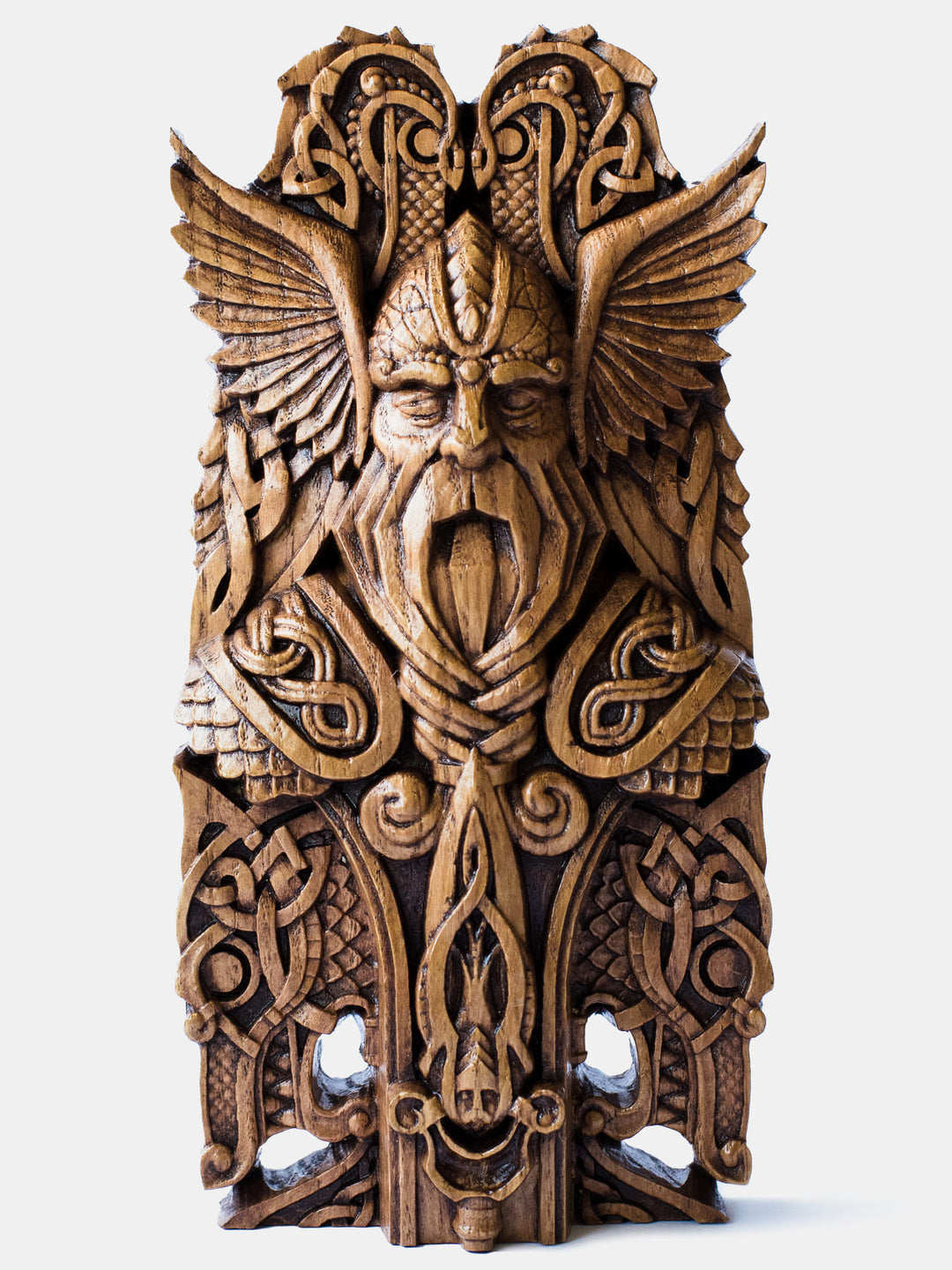
Yule is the night the sun is reborn. On the winter solstice, the longest night of the year, people across the old Norse, Celtic and modern pagan traditions light candles, bring evergreens indoors and welcome the returning light. A Yule altar gathers all of this in one place. At its heart stands the image of the deity you honor, such as a wooden statue of Odin, the god the Norse called Jólnir, "the Yule one."
This guide walks you through the symbols, colors, herbs and deities of Yule, and how to arrange them step by step. The winter solstice falls on December 21 or 22, depending on the year.
What Should You Put on a Yule Altar?
A Yule altar celebrates light returning to the darkness. Every item on it should speak of rebirth, warmth or the evergreen life that survives the winter.

Evergreens and Nature Gifts:
- Pine, fir and spruce: symbols of life that endures through the cold.
- Holly and ivy: protection and the balance of masculine and feminine.
- Mistletoe: peace, fertility and blessing.
- Pinecones and acorns: the seed of new life waiting for spring.
- Antlers: the stag and the Horned God of the forest.
Symbols of the Returning Sun:
- Candles: the most important item. Light one on solstice night to welcome the sun back.
- A Yule log: a small log of oak or birch, decorated with greenery and candles.
- A sun wheel: a circle or eight-spoked wheel for the turning year.
- Oranges and dried citrus slices: small suns for your altar.
Sacred Colors of Yule:
- Red: life, warmth and the hearth fire.
- Green: evergreen life and hope.
- Gold: the reborn sun.
- White: snow, purity and stillness.
Herbs, Spices and Crystals:
- Herbs and spices: cinnamon, cloves, rosemary, bay leaves, frankincense and pine resin.
- Crystals: garnet, bloodstone, ruby and clear quartz.
Which Deities Are Honored at Yule?
The centerpiece of a Yule altar is the deity you call on to bless the season. Here are the gods and goddesses most often honored at midwinter.

- Odin: the All-Father leads the Wild Hunt across the winter sky. A wooden Odin statue brings his wisdom to the darkest night.
- Cernunnos, the Horned God: in many modern pagan traditions, the god of the forest is reborn with the sun at Yule. A Cernunnos statue fits perfectly among evergreens and antlers.
- Gaia, Mother Earth: she rests under the snow and holds the seeds of spring. A Gaia statue honors the quiet power of winter earth.
- Freya: many Heathens honor the Vanir at Yule, asking for abundance and love in the year ahead. A Freya statue brings warmth to a Norse altar.
Every deity in this guide is available in our shop in several designs, from small altar figurines to detailed busts. Explore all our Odin statues, Cernunnos statues, Gaia statues and Freya statues to find the one that speaks to you.
Looking for a gift for a pagan friend? Our Yule gift guide for pagans will help you choose the right deity for them.
To learn more about each god and goddess of the season, read our guide to Yule gods and goddesses.
You do not need many statues. One deity, chosen with intention, gives your altar a clear heart.
How to Set Up Your Yule Altar Step by Step

- Cleanse the space. Clear the surface and burn a little pine resin or rosemary.
- Lay down a cloth. Choose red, green, gold or white.
- Place your deity in the center. Set the statue slightly back, so the light falls on it.
- Add candles. Arrange them around or in front of the statue. Wooden candle holders keep the altar natural and warm.
- Bring in the evergreens. Frame the altar with pine, holly and ivy.
- Add symbols of the sun. A Yule log, a sun wheel or dried orange slices.
- Leave an offering. Mead, spiced cider, bread, nuts or a written wish for the new year.
A statue carved from natural oak belongs on a Yule altar. Wood was once a living tree, and it carries the same evergreen spirit as the branches around it.
When to Set Up and Take Down Your Yule Altar?
Many people set up their altar a few days before the solstice and keep it through the Twelve Nights of Yule, until early January. The most important moment is solstice night: light your candles at sunset and keep one burning until sunrise, if you can do so safely.
What to Do with Your Yule Altar Afterwards?
This is a question many people forget to ask.
- Evergreens: return them to nature, compost them or burn them in a safe outdoor fire.
- Food offerings: bury them or leave them under a tree, away from paths.
- The Yule log: tradition says to keep a small piece to light next year's log, carrying the light from year to year.
- Your statue: it stays on your altar or home shrine all year. Your deity does not leave when the season ends.
The most powerful Yule altar is not the biggest one. It is the one made with intention, where the light you kindle on the longest night is truly yours.
Frequently Asked Questions
What do you put on a Yule altar?
Candles, evergreens, a Yule log, sun symbols, red and green colors, and a statue of the deity you honor.
What god is honored at Yule?
Odin, the Horned God Cernunnos, Mother Earth Gaia and Freya are among the most honored. Choose the one you feel closest to.
When should I set up my Yule altar?
A few days before the winter solstice, which falls on December 21 or 22, and keep it until early January.
What are the colors of Yule?
Red, green, gold and white.


Leave a comment