
Hekate Triformis: The Three Faces of Hecate and How to Honor Them on Your Altar
Written by Mykhailo, woodcarver and founder of Blagowood since 2015
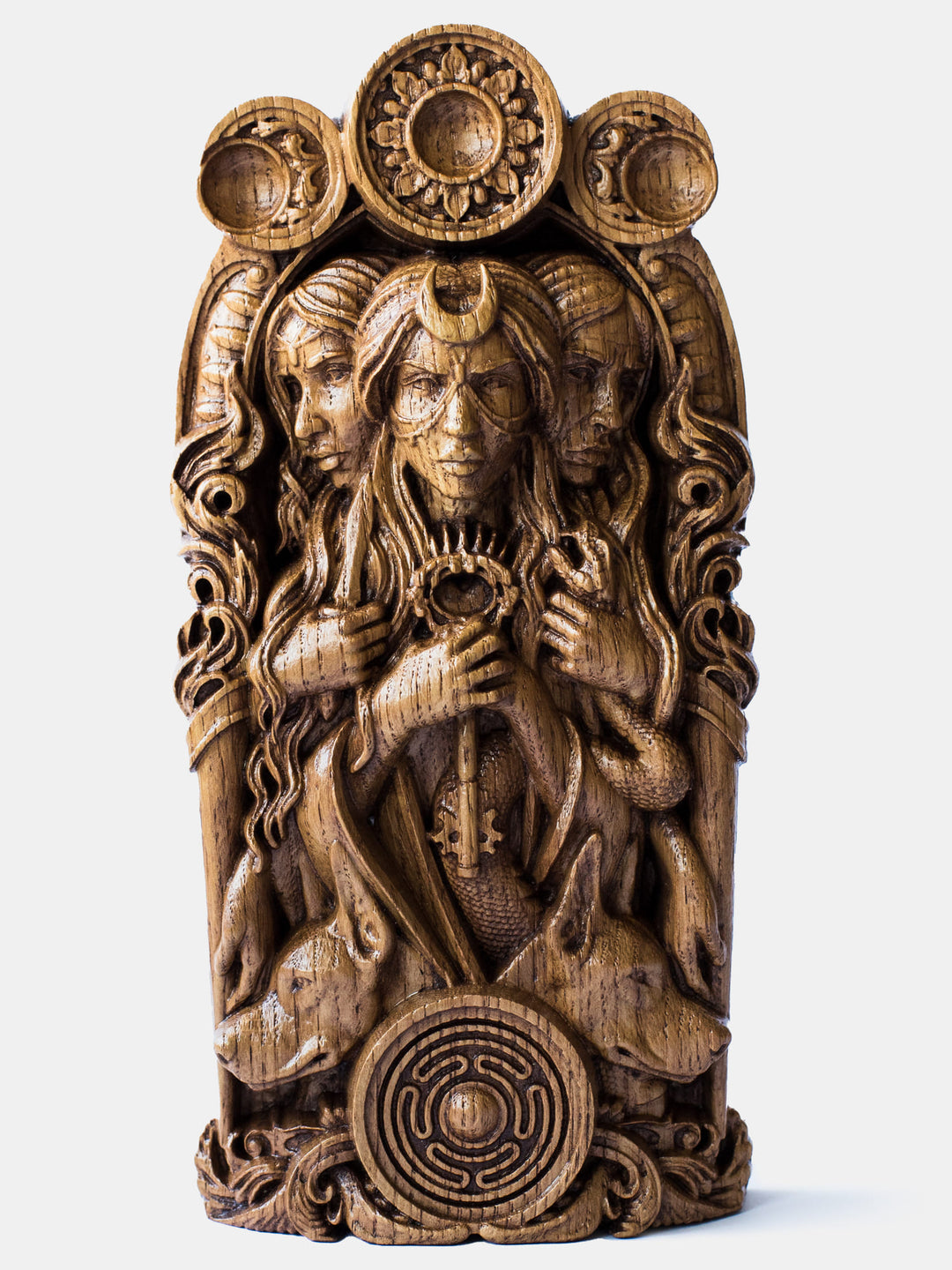
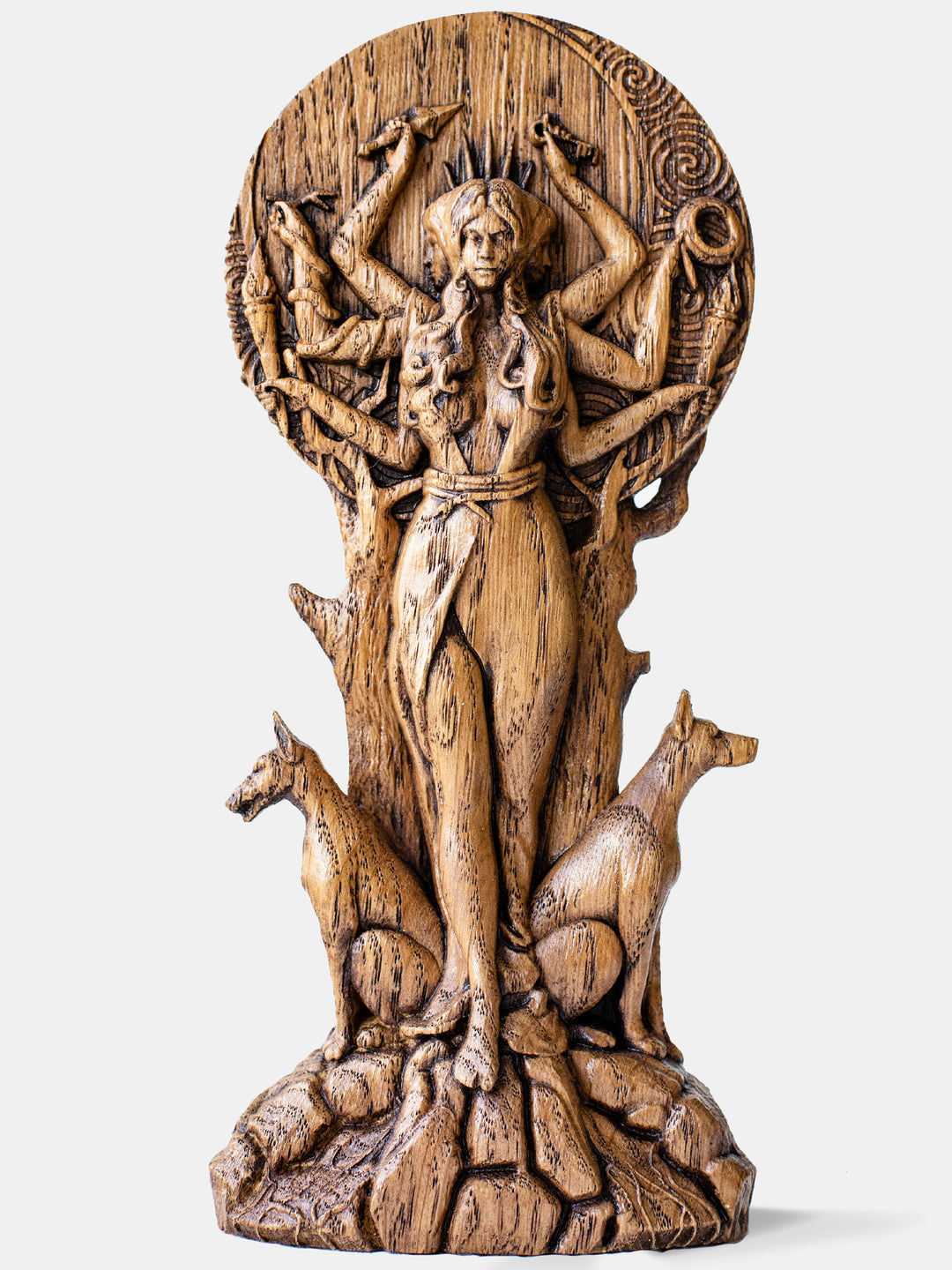
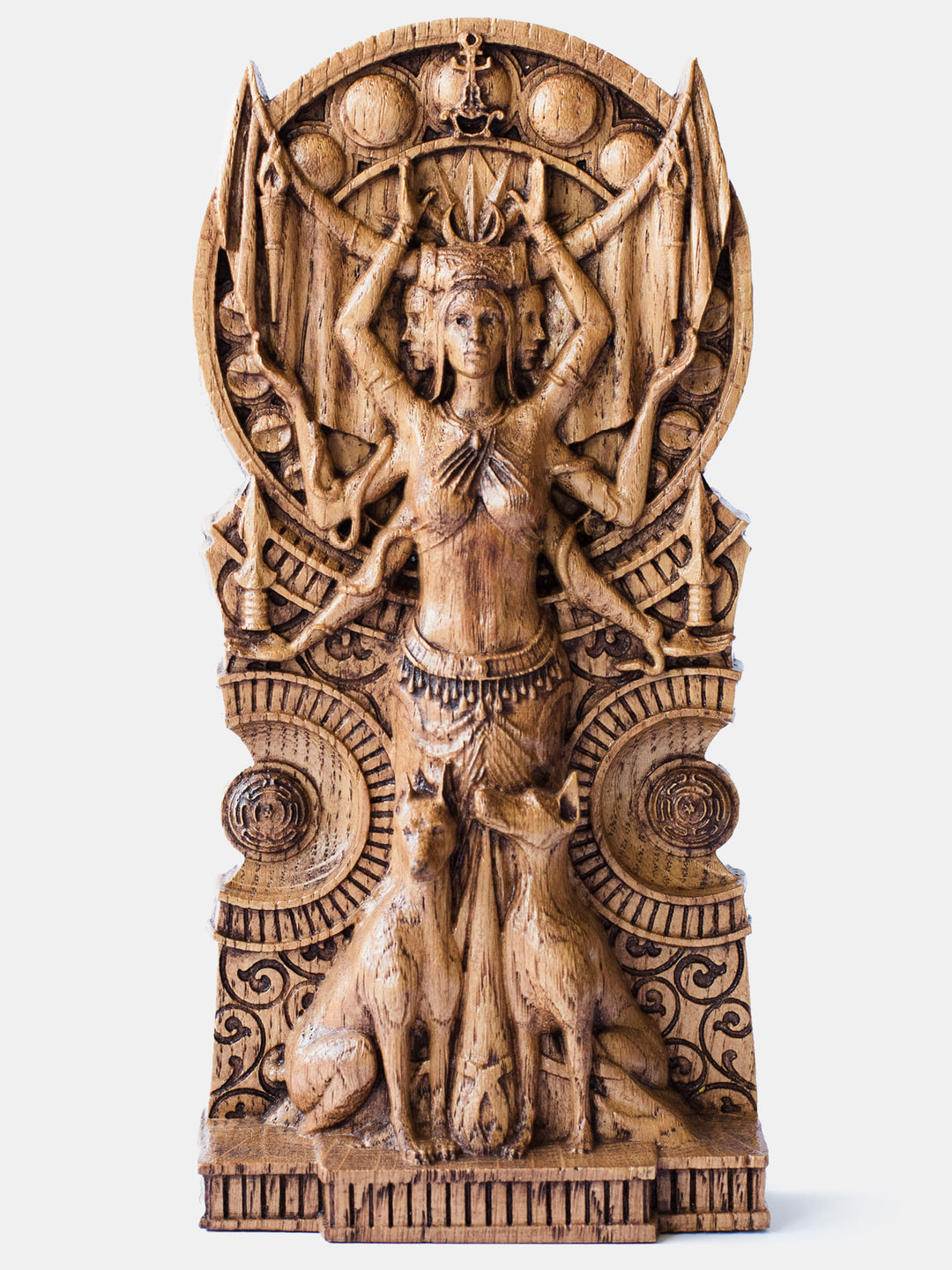
 Hecate rarely stands alone in ancient art. From the crossroads shrines of Athens to the altars of modern witches, she appears in three bodies joined back to back, each looking down a different road. This image, known as Hekate Triformis, is one of the oldest ways to picture her, and many practitioners recreate it today with a triple statue of Hecate at the heart of their altar. In this guide we look at what her three forms mean, where the image comes from, and how to build a triple altar of your own.
What does Hecate's triple form mean?
The Greeks called her Trimorphos, "of three forms", and the Romans Trivia, "of the three roads". Her three faces watched over the place where three roads meet: a place of choice, crossing and protection. Hesiod's Theogony also says that Zeus honored Hecate with a share of the earth, the sea and the starry sky, and later writers saw her three forms as her reach across these realms.
 Each part of her image carries meaning:
- Torches — she is Phosphoros, the light-bringer. In the Homeric Hymn to Demeter she meets Demeter with a torch in her hands during the search for Persephone.
- Keys — she is Kleidouchos, the key-bearer, keeper of gates, thresholds and mysteries.
- Hounds — her sacred animals. Barking dogs at night were said to announce her presence.
- The crescent moon — her bond with the moon grew in later antiquity, when she was linked with Selene and Artemis.
- The Strophalos, or Hecate's wheel — the spinning wheel of the late antique Chaldean Oracles. The maze-like "Hecate's wheel" used today is a modern design based on it.
- Serpents — renewal and her power below the earth.
Where does the triple Hecate image come from?
Early Greek art shows Hecate as a single young woman holding torches. According to Pausanias, the Athenian sculptor Alcamenes, in the 5th century BCE, was the first to carve three figures of Hecate joined together. That statue, Hecate Epipyrgidia, "on the tower", stood beside the Temple of Athena Nike on the Acropolis.
Small three-sided shrines called hekataia soon stood at crossroads and beside house doors. At the dark moon, families left food there for her, a custom known as Hecate's Supper, or Deipnon. You can read how to prepare these gifts in our practical guide to Hecate's offerings.
Is Hecate the Maiden, Mother and Crone?
Many modern books describe the triple Hecate as maiden, mother and crone. This reading comes from 20th-century writers and from modern Wicca, not from ancient Greek religion. In ancient art her three forms were usually the same goddess facing three directions.
Both views have a place in modern practice. Some people honor three equal faces at the crossroads; others honor three stages of life. Choose the meaning that speaks to your own practice.
Meet the Blagowood Hecate triptych
 Our new Hecate triptych brings the crossroads shrine to your altar in three carved panels:
- The center — Hecate enthroned beneath a full moon held between two crescents. She holds her key, torches burn on the columns beside her, and the Strophalos lies at her feet.
- The left panel — Hecate raising her torch, with her hound at her side and a crescent moon above.
- The right panel — a hooded Hecate with her torch and hound, the guardian of hidden paths.
The three panels can stand side by side like a small temple, or around a candle as a true crossroads shrine. They are carved from natural wood and finished by hand in our family workshop. Each panel is 23 cm (9.1") tall and 4 cm (1.6") deep; the side panels are 8 cm (3.1") wide and the central panel is 10 cm (3.9") wide. You can choose the full set of three or any single panel.
Hecate is also available in several other designs, from her crossroads statues to busts. See all of them in our Hecate statues collection, or explore other goddess statues.
How do you set up a triple altar for Hecate?

- Choose the place. A quiet shelf or table works well, ideally near a door or window: Hecate is a goddess of thresholds.
- Place her three forms. Set the central figure slightly higher and turn the side figures a little inward, so the three face different ways, as at a crossroads.
- Light the way. Put a candle before each form to honor her torches. Never leave candles burning unattended.
- Add her symbols. An old key, crystals such as amethyst, obsidian or moonstone, and perhaps a figure of Hecate's owl.
- Make an offering. At the dark moon, leave bread, garlic, eggs or honey for her.
- Speak to her. A short prayer before each form is enough. For timing and ritual steps, see our guide to the rituals of Hecate.
How do you care for your Hecate altar between rituals?
Remove food offerings before they spoil. Traditionally they are left at a crossroads, buried, or put out for animals, never eaten afterwards. Dust the carving with a soft dry brush and keep the wood away from radiators, direct sun and damp. Many practitioners refresh the altar at each dark moon, which also marks a new cycle of working with her.
Hecate's three faces remind us that every crossroads holds more than one path. However you honor her, what matters most is the sincerity and care you bring to her altar.
Frequently asked questions
What is Hekate Triformis? It is the image of Hecate in three forms joined back to back, each facing a different road. It dates back to at least the 5th century BCE in Athens.
Why does Hecate have three faces? She guarded crossroads where three roads meet, and her three forms watch every direction. Later writers also linked them to her power over earth, sea and sky.
Is Hecate a maiden, mother and crone? Not in ancient Greek religion. This reading comes from 20th-century writers and modern Wicca, and many practitioners use it today.
What do I put on a Hecate altar? A statue or image of Hecate, candles for her torches, a key, crystals, and offerings such as bread, garlic, eggs or honey at the dark moon. To learn more about the goddess herself, read who is Hecate.
Frequently Asked Questions
What is Hekate Triformis?
It is the image of Hecate in three forms joined back to back, each facing a different road. It dates back to at least the 5th century BCE in Athens.
Why does Hecate have three faces?
She guarded crossroads where three roads meet, and her three forms watch every direction. Later writers also linked them to her power over earth, sea and sky.
Is Hecate a maiden, mother and crone?
Not in ancient Greek religion. This reading comes from 20th-century writers and modern Wicca, and many practitioners use it today.
What do I put on a Hecate altar?
A statue or image of Hecate, candles for her torches, a key, crystals, and offerings such as bread, garlic, eggs or honey at the dark moon.







Leave a comment